
21 June 2026
Humidity, Your Guitar's Neck, and the Seasons
— The Journal
Humidity, Your Guitar's Neck, and the Seasons
Wood moves. It's the one thing every experienced luthier will tell you, and it's the reason a guitar that played beautifully in winter can develop buzzing frets or stiff action by summer without anyone touching the truss rod. If you've ever wondered why your guitar seems to need a "tune-up" with the seasons, this is almost always why.
Why this happens
Your guitar's neck and fretboard are still timber, and timber absorbs and releases moisture depending on the air around it. As humidity rises, wood tends to swell slightly; as it drops, the wood shrinks. That movement changes the neck's relief — the very slight forward curve along its length — which is exactly what your truss rod is there to correct. A neck that's gone into back-bow from very dry air will often buzz on the lower frets. A neck that's bowed forward from a humid stretch will tend to need more pressure to fret notes higher up, and the action will feel high.
This isn't a fault with your guitar. It's wood behaving like wood. The goal isn't to stop it moving entirely, but to keep the swings gentle enough that your setup stays close to where you left it.
What to actually watch for
A few signs are worth paying attention to as the seasons change:
New buzzing, especially concentrated around the middle of the neck, that wasn't there before. A change in action height without anyone adjusting anything. Finish that looks like it's developed a fine crack, particularly around the top of an acoustic, which can be an early sign of the wood drying out more aggressively than the finish can handle. And, less obviously, tuning that seems to drift more than usual, which can be partly down to a top or neck that's still settling into a new moisture level.
Keeping things stable
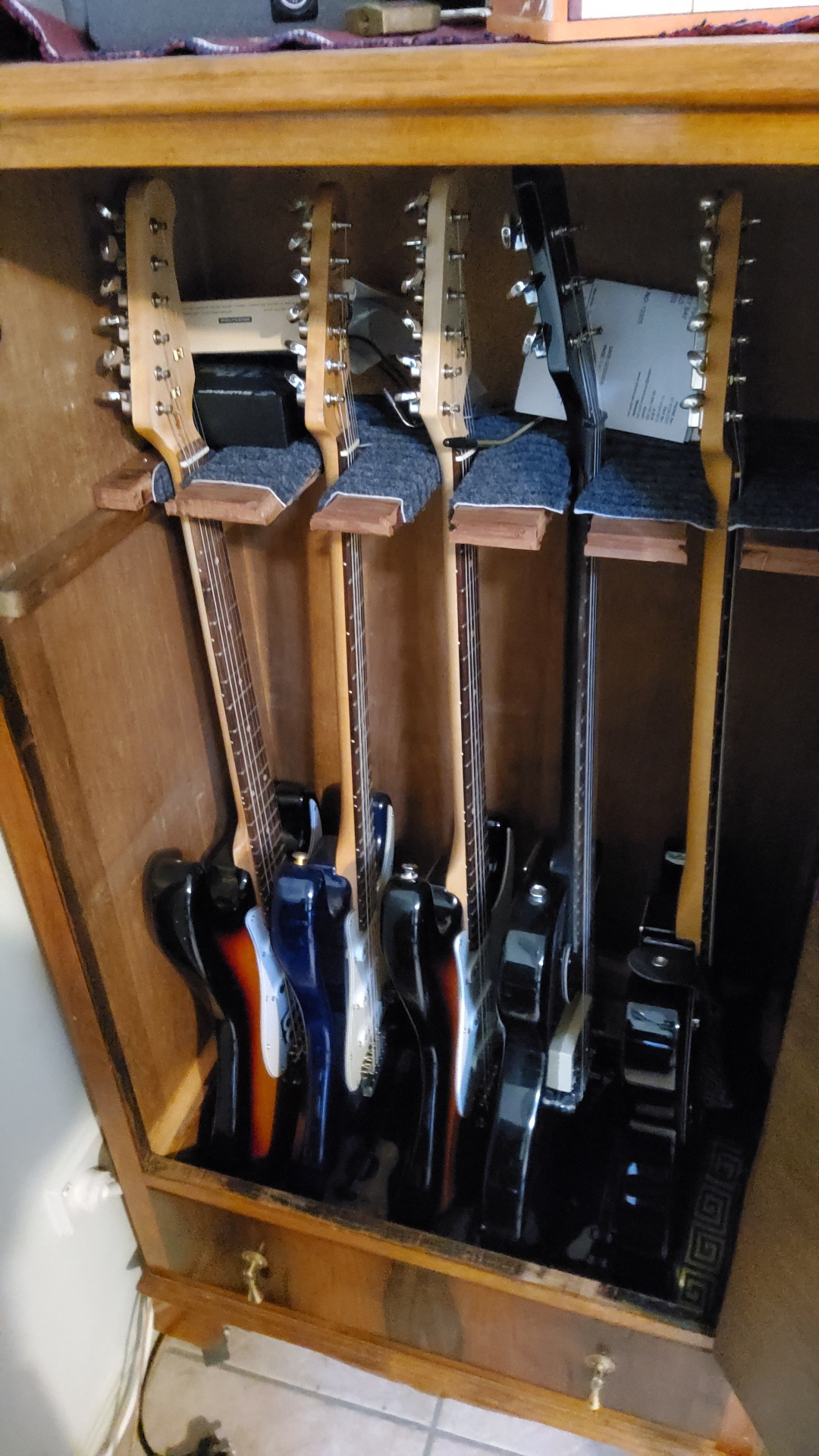
The most effective single habit is storing the guitar in its case rather than on a stand or wall hanger when you're not playing it. A closed case buffers the instrument against rapid swings in room humidity far better than open air does, especially in a household that runs heating or air conditioning. For anyone in a particularly dry climate, or going through a dry season, a case humidifier is a simple, inexpensive way to keep moisture levels steadier around the instrument.
If you're moving the guitar somewhere with a noticeably different climate — interstate, into an air-conditioned venue from a humid outdoor gig, that sort of change — give it some time to acclimatise in its case before you start adjusting anything. Wood doesn't respond instantly, and neither should your truss rod.
When it's time to bring it in
A quick truss rod tweak can sometimes correct minor seasonal relief changes, but if you're not confident doing that yourself, it's not worth guessing. Over-tightening a truss rod that's already near its limit can damage the rod or the neck, and that's a far bigger job than the one you started with. If your action's changed, you're hearing new buzz, or it's just been a while since your last proper setup, that's exactly the kind of seasonal check we do on the bench — relief, action, intonation, all looked at together rather than chasing one symptom at a time.
Book a repair and we'll get it back to where it should be.